Multi-Higgs models
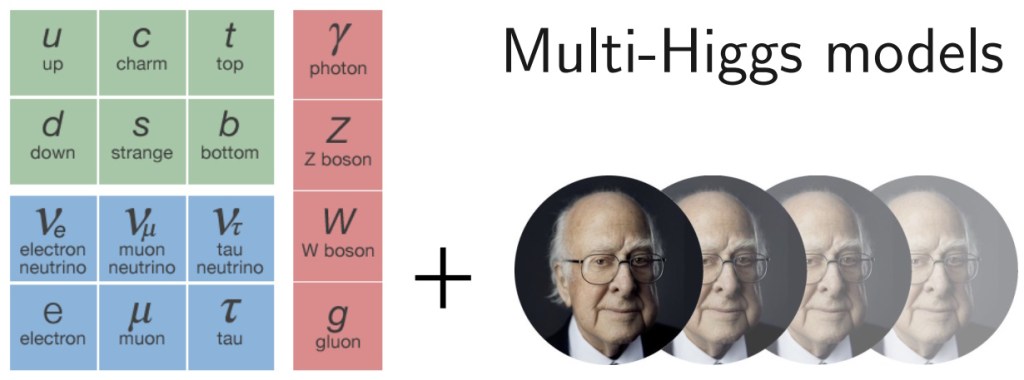
The Standard Model relies on the simplest version of the Brout-Englert-Higgs mechanism. However, nothing requires the Higgs sector to be minimal. Just as the fundamental matter fields come in three generations, the scalar fields can come in multiplets. Resolving the nature of the Higgs sector is up to experiment, but we must be prepared to recognize the first hints of non-minimal scalar sectors at colliders or in cosmological observations.
The vast majority of papers in multi-Higgs physics focus on collider and cosmological predictions for specific models. But there are equally important and technically challenging structural issues which must be resolved in order to cleverly explore the richness of the multi-Higgs models. Which symmetries can exist? Can they address the flavor puzzle? What are their phenomenological consequences? What can new scalars do for neutrinos? What kinds of phase transitions in the early Universe can be anticipated? What dark matter candidates can be accommodated within these scalar sectors?
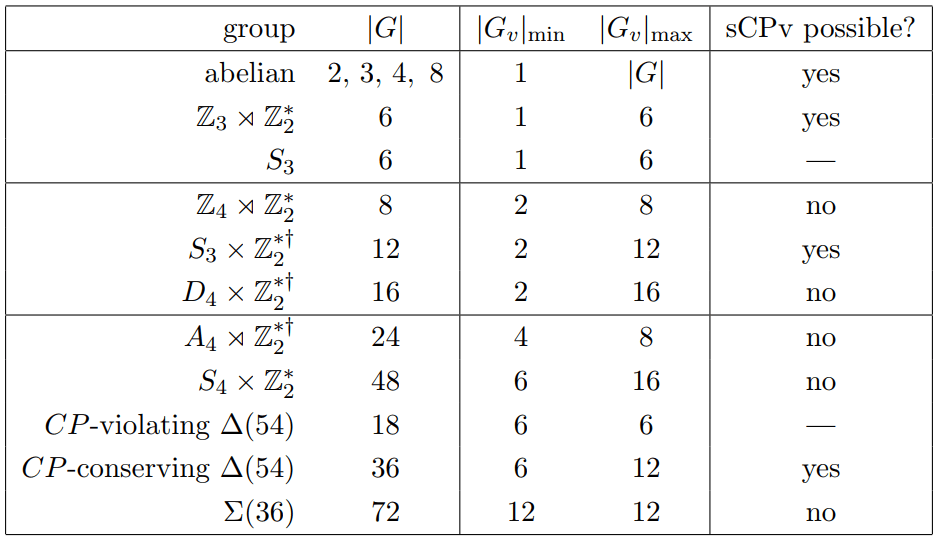
Together with collaborators and students, I try to help answer many of these questions within popular multi-Higgs frameworks. Classification of symmetries and their breaking patterns in the 2HDM, 3HDM and beyond; new mathematical tools applicable to many BSM theories; compact checks of the scalar potential stability; powerful basis-independent methods; a peculiar 3HDMs based on an exotic CP symmetry and its remarkable phenomenology; charge-breaking phase transitions in the early Universe — these are some of the highlights of my recent multi-Higgs research.
For an introduction to multi-Higgs models, see my review
Igor P. Ivanov, Building and testing models with extended Higgs sectors, Prog.Part.Nucl.Phys. 95 (2017) 160-208 • e-Print: 1702.03776.
My papers with 200+ citations:
I.F. Ginzburg, I.P. Ivanov, Tree-level unitarity constraints in the most general 2HDM, Phys.Rev.D 72 (2005) 115010 • e-Print: hep-ph/0508020.
I.P. Ivanov, Minkowski space structure of the Higgs potential in 2HDM, Phys.Rev.D 75 (2007) 035001 • e-Print: hep-ph/0609018
Igor P. Ivanov, Minkowski space structure of the Higgs potential in 2HDM. II. Minima, symmetries, and topology, Phys.Rev.D 77 (2008) 015017 • e-Print: 0710.3490
A. Barroso, P.M. Ferreira, I.P. Ivanov, Rui Santos, Metastability bounds on the two Higgs doublet model, JHEP 06 (2013) 045 • e-Print: 1303.5098
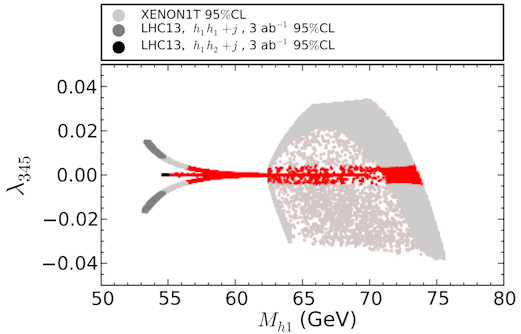
A. Belyaev, G. Cacciapaglia, I.P. Ivanov, F. Rojas-Abatte, M. Thomas, Anatomy of the Inert Two Higgs Doublet Model in the light of the LHC and non-LHC Dark Matter Searches, Phys.Rev.D 97 (2018) 3, 035011 • e-Print: 1612.00511 [hep-ph]

Particle physics applications of vortex states
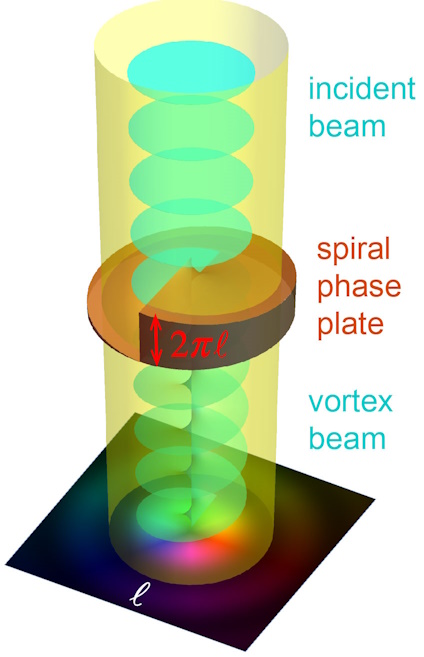
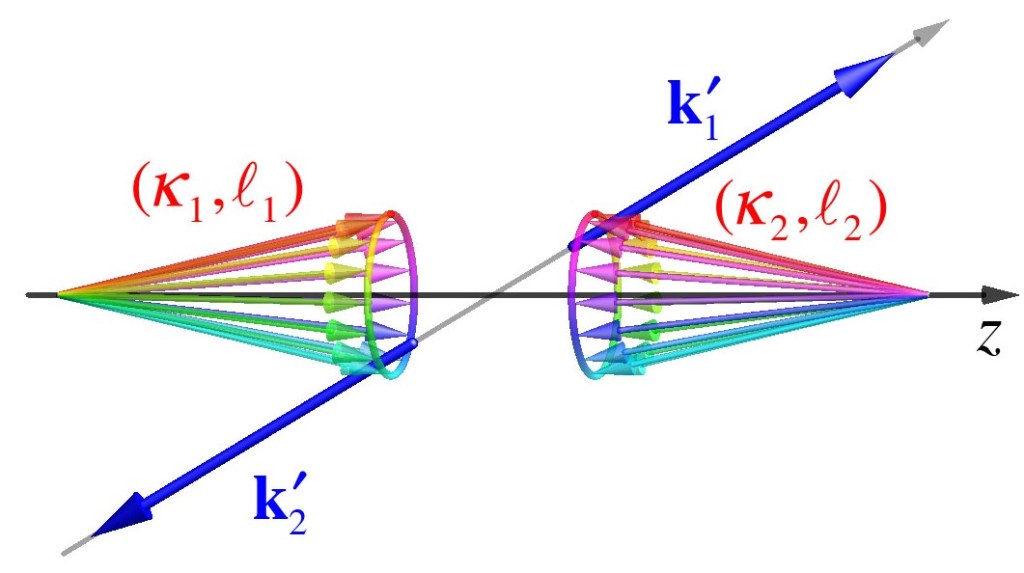
Vortex states of photons, electrons, and other particles are freely propagating wave packets with helicoidal wave fronts winding around the phase vortex axis. A particle prepared in a vortex state carries a non-zero orbital angular momentum (OAM) projection on the average propagation direction. This overall intrinsic OAM is a totally new degree of freedom, a new quantum number distinct from spin, which has never been exploited in experimental particle and nuclear physics.
Low-energy vortex photons, electrons, neutrons, and even atoms have been demonstrated in experiment and enjoy numerous applications. There exist proposals of generating high energy vortex photons and electrons, or creating vortex states of protons, muons and so on. Anticipating future experimental progress, one can ask what insights on nuclei and hadrons will follow once collisions of high-energy vortex states are experimentally realized.
Together with a network of students and collaborators, we explore the rich physics potential of vortex state collisions. We have already demonstrated that they offer access to quantities that cannot be measured in traditional collisions. Vortex states provide a totally new probe of spin properties of hadrons, with tantalizing opportunities to address the proton spin puzzle.
For more details, see my reviews
Igor P. Ivanov, Promises and challenges of high-energy vortex states collisions, Prog.Part.Nucl.Phys. 127 (2022) 103987 • e-Print: 2205.00412 [hep-ph]
K. Y. Bliokh, I. P. Ivanov et al, Theory and applications of free-electron vortex states, Phys.Rept. 690 (2017) 1-70 • e-Print: 1703.06879 [quant-ph]
 Igor Ivanov